Description
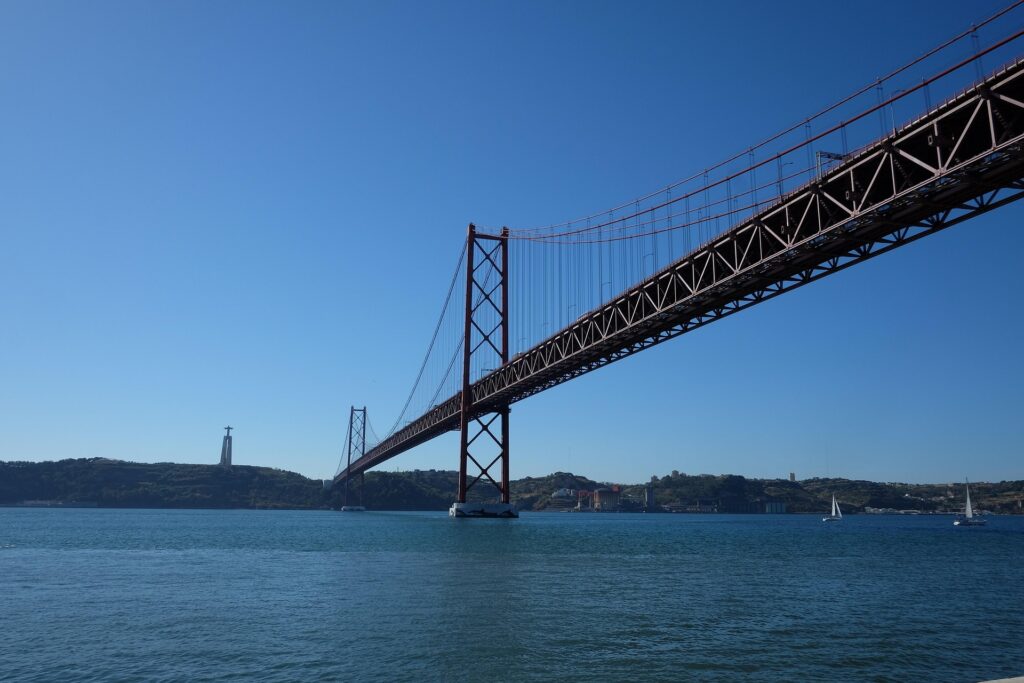
The workshop on “Logical Approaches to Handling Inconsistent Data” (LINDA) will be taking place on July 24th 2026. LINDA will be a co-located event of the Conference on Principles of Knowledge Representation and Reasoning (KR’2026) as a part of the Federated Logic conference (FLoC’2026). All of these events will be taking place in Lisbon.
Program
Invited Talks
Leopoldo Bertossi – Carleton University, Canada & IMFD, Chile
Probabilistic Databases for Dealing with Missing Values that are Governed by Missingness Mechanisms
Missing Values (MVs) in databases (DBs) are problematic for at least two data quality dimensions: completeness and consistency. Starting from an “observed” DB D* that exhibits MVs on which we would like to do query answering (QA), and assuming we have additional stochastic knowledge about the Missingness Mechanisms at play (that is, how and when MVs occur, as introduced by Donald Rubin), we represent D* as Probabilistic DB. We show how we can (and if we can easily) obtain from the latter a “best” MV-free possible DB D on top of which one can do QA. This is joint research with Farouk Toumani.
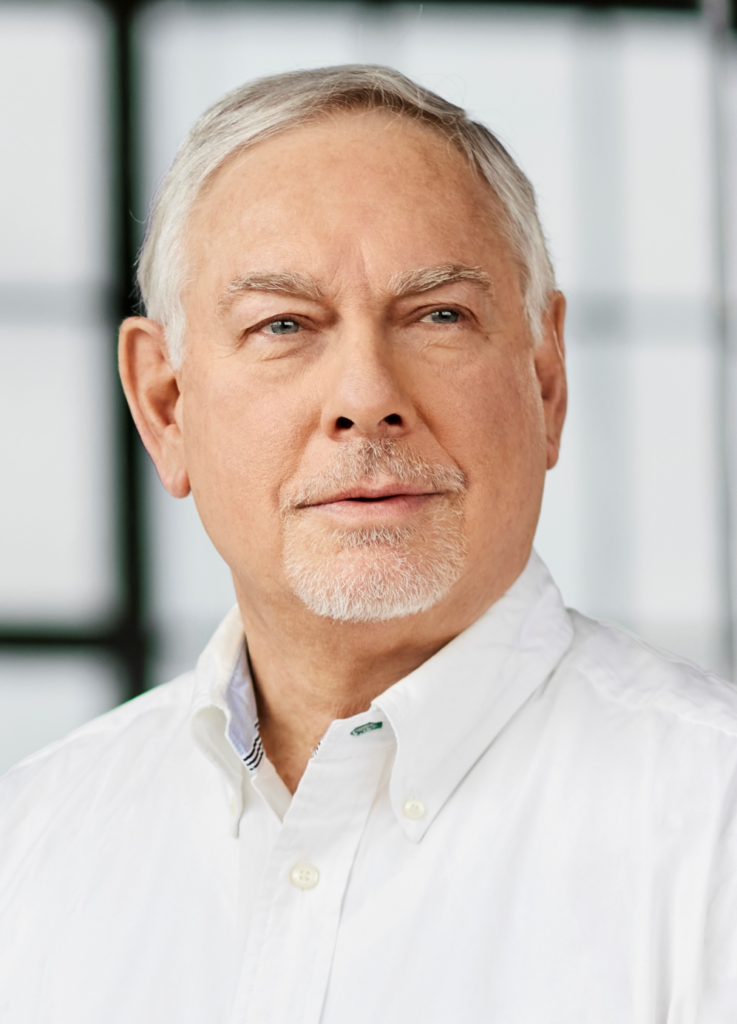
Thomas Eiter – TU Wien, Austria
The Never-Ending Issue of Inconsistency Handling: Past and Future from a KR Perspective
Handling inconsistency is an ubiquitous issue in data and knowledge processing, which has been raised early on and has continuously been receiving a lot of attention. Various methods and approaches have been developed, resulting in a rich landscape for tackling this problem. In this talk, we consider the history and evolution of the topic, as well as possible future directions from a KR perspective and personal experience.

Oral Presentations
- Towards a Thorough Understanding of ABox Abduction Under Repair Semantics, A. Haak, P. Koopmann, Y. Mahmood, A. Turhan
- Range Consistent Query Answering via Rewriting, J. Wijsen
- Optimal Correction Sets for Argumentative Causal Discovery, F. Russo, G. Mazzotta, C. Dodaro, F. Ricca, F. Toni
- A Local Perspective on Inconsistency in Data-Graphs, N. Pardal, M. Martinez
- Towards an End-to-End ASP-Based System for Handling Inconsistent Prioritized Data, M. Bienvenu, C. Bourgaux, K. Inoue, R. Jean, G. Mazzotta
Posters
- Model Repairing And Belief Change Operators, D. Grimaldi, E. Baque
- Approximate Functional Dependencies—Implication Problem Revisited, N. Fröhlich, M. Häggblom, Å. Hirvonen, M. Hirvonen
- Preliminary Report on Scalable Optimal-Repair Based Query Answering with Non-Binary Conflicts, M. Bienvenu, C. Bourgaux, A. Laouar
- Bridging Statistical and Logical Perspectives on Inconsistency, L. Zuccato, A. George, V. Vitelli, A. Frigessi, M. Giese, I. Scheel
- Errors Need Not Show Up as Inconsistencies: From Error-tolerant Reasoning to Argumentation Frameworks, F. Baader, O. Barreca
- Towards Computing Pointwise Repairs in a Fragment of DatalogMTL, A. Khodadaditaghanaki
- Inconsistency Through Incompleteness, L. Gutsche
- SHACL Validation and Static Analysis in Presence of Ontologies: an Overview, A. Oudshoorn
Call for Papers
Context and motivation
It is widely acknowledged that real-world data is plagued with quality issues, including false and/or outdated information. A common method for detecting erroneous facts is to employ database constraints or domain knowledge, typically expressed in some logic-based formalisms. Once inconsistencies have been detected, one may either modify the data in order to restore consistency or reduce the level of inconsistency, and/or employ inconsistency-tolerant semantics in order to be able to return meaningful answers to queries despite the contradictory information. There is an extensive body of work on handling inconsistent data, which was developed initially within the database community but has subsequently grown into a prominent topic among knowledge representation and reasoning (KR) researchers, particularly in the context of ontology-based data access. However, despite notable advances, there still remains much to be done to obtain practical and robust inconsistency-handling methods and to develop scalable implementations. Moreover, there is a real need to bring together different groups and subareas working on the topic to exchange experiences. Indeed, there is much to gained from bridging research conducted in the database, KR, and Semantic Web communities, as well as across different KR subareas. The interest in doing so can be witnessed by several recent results showing how repairs of databases and knowledge bases can be related to argumentation and belief change, as well as by transfers of results between the database and KR settings. Furthermore, the development of effective tools will necessarily rely upon advances issuing from the automated reasoning community, notably, SAT solvers, answer set programming systems, rule engines, and ontology reasoners.
Aims and scope of the LINDA workshop
The LINDA workshop aims to bring together groups of researchers from different communities who are interested in developing principled logic-based methods for tackling inconsistent data, in order to share recent advances, discuss open challenges, and exchange experiences. A non-exhaustive list of topics in the scope of the workshop is the following:
- database and knowledge base repairs
- inconsistency-tolerant semantics (e.g. repair-based and paraconsistent semantics)
- inconsistency measures
- explanations of inconsistencies or query answers over inconsistent data
- incorporating qualitative or quantitative preferences
- probabilistic, possibilistic, and neuro-symbolic approaches to handling inconsistent data
- inconsistency handling for temporal and/or spatial data
- handling other forms of imperfect data (e.g. incompleteness, imprecision, uncertainty, entity resolution)
- connections to other KR areas (e.g. argumentation, logic programming, non-monotonic reasoning)
- implementations of inconsistency handling approaches
We also welcome contributions and participation from researchers working on closely related topics, whose experience may contribute to achieving robust methods for handling inconsistent data.
Important dates
All deadlines are AoE – Anywhere on Earth (UTC-12).
- Paper submission deadline (updated): April 25, 2026
- Notification of acceptance: May 22, 2026
- Early registration deadline: June 1, 2026
- Final version deadline: June 22, 2026
- Workshop: July 24, 2026
Submission guidelines
As the main aim of the workshop is to promote discussion, we welcome not only submissions reporting on unpublished results or ongoing work, but also extended abstracts that summarize previous publications that fall within the workshop scope. In order to avoid any conflicts with previous or future publications, the workshop will not have formal proceedings, but accepted contributions will be made available on the workshop website.
Submissions should take the form of extended abstracts (2-5 pages long, excluding references) and be formatted in CEURART style. Reviewing will be single-blind, so submissions should include the names and affiliations of authors. Any published papers or preprints on which the extended abstract is based should be cited. It is also possible to provide a long version of the work, or additional details, in a clearly marked appendix (note that the appendix does not need to be in CEURART style).
Submissions will be managed via the FLoC submission system: https://submissions.floc26.org/linda/
Organisation
Organisers
- Meghyn Bienvenu – CNRS & University of Bordeaux
- Camille Bourgaux – CNRS & DI ENS
- Anni-Yasmin Turhan – Paderborn University
Program committee members
- Franz Baader – TU Dresden
- Salem Benferhat – CRIL, CNRS, Université d’Artois
- Marco Calautti – University of Milan
- Victor Gutierrez-Basulto – Cardiff University
- Anselm Haak – Paderborn University
- Benny Kimelfeld – Technion
- Patrick Koopmann – Vrije Universiteit Amsterdam
- Domenico Lembo – Sapienza Università di Roma
- Yue Ma – University of Paris-Saclay
- Yasir Mahmood – Paderborn University
- Vanina Martinez – IIIA-CSIC
- Tommie Meyer – University of Cape Town and CAIR
- Cristian Molinaro – University of Calabria
- Andreas Pieris – University of Cyprus & University of Edinburgh
- Nico Potyka – Cardiff University
- Riccardo Rosati – Sapienza Università di Roma
- Matthias Thimm – University of Hagen
- Renata Wassermann – Universidade de São Paulo
- Jef Wijsen – University of Mons (UMONS)